
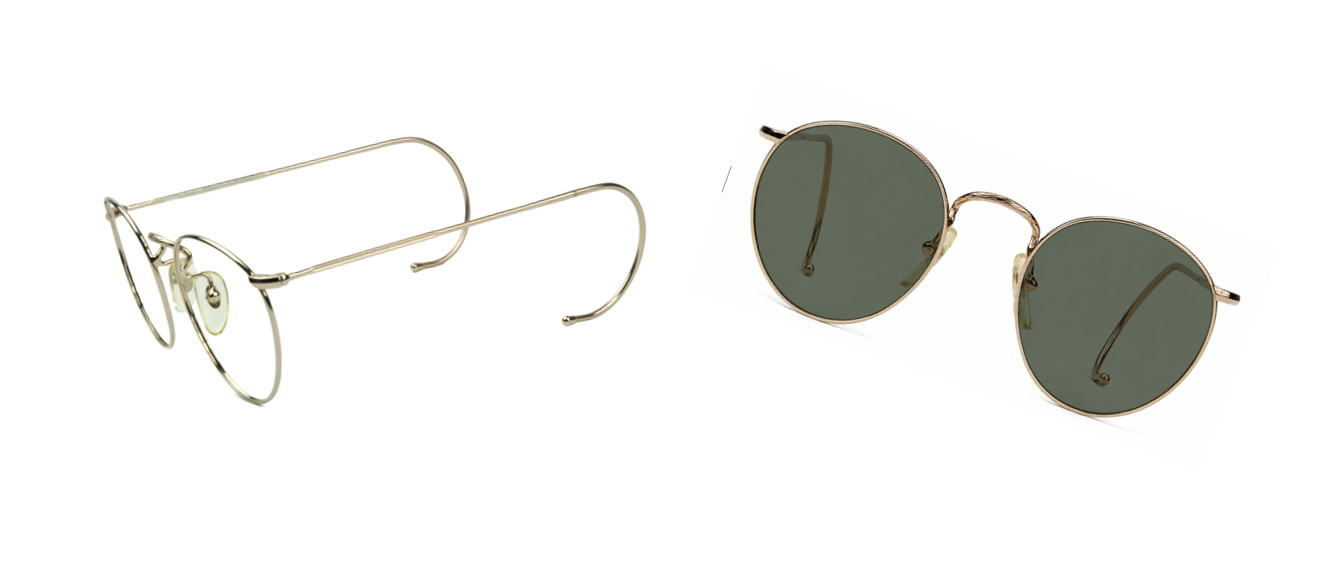
If you have ever wondered how eyeglasses evolved from fragile, hard-to-wear tools into dependable everyday essentials, the history of cable temple eyeglasses offers a fascinating answer. Long before temple arms became standard, spectacles were often awkward, uncomfortable, and impractical for daily use. Some had to be held by hand, while others pinched the nose so tightly that wearing them for long periods became unpleasant. In many cases, people simply dealt with constantly readjusting their eyewear.
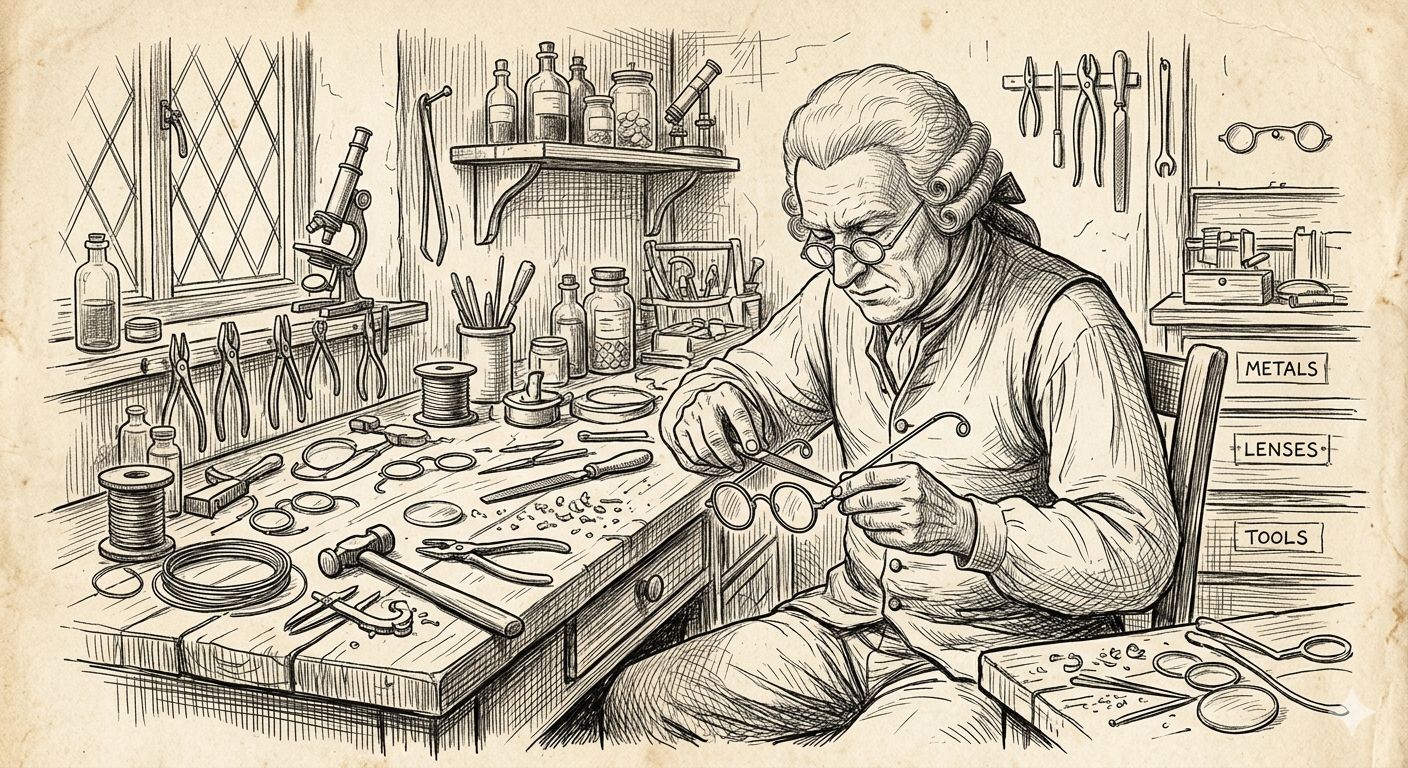
Edward Scarlett
Introduction of temple arms in the 1720s
A major turning point came in the early 18th century, when London optician, Edward Scarlett, designed the first short rigid temple-arms for spectacles. These early side-arms pressed against the temples of the head rather than hooking over the ears, but they marked one of the first true steps toward modern eyewear design. While simple by today’s standards, this improvement made eyewear noticeably more wearable.
Fashion & Early Glasses
In the 18th century, powdered wigs often covered the ears, which limited design options in terms of making ear-hooking temples. Instead, early temples pressed gently against the head or were adapted to work with ribbons and wig styles of the time. The design improved stability, but it still was not ideal for active movement.
The Rise of Cable Temple Eye Frames in the 1800s
By the late 19th century, everyday life had become faster, more mobile, and more physically demanding. Industrialization changed how people worked and traveled. Moreover, outdoor activities such as horseback riding, cycling, and hunting increased the need for eyeglasses that could stay secure during movement. At this point, straight side-arms were no longer enough. Wearers needed a design that could provide a more stable fit without sacrificing comfort. That demand led to one of the most important milestones in eyewear history: the riding bow, also known today as the cable temple. Manufacturers such as American Optical helped popularize flexible metal temples that wrapped behind the ears for a more secure hold. Unlike earlier straight arms, cable temples created a gentle, locked-in fit that dramatically improved stability without excessive pressure. For the first time, glasses could stay in place reliably during vigorous movement, making them ideal for professionals, riders, and outdoor wearers alike.
From the 1890s through the 1920s, cable temple eyewear entered what many collectors consider its golden age. These frames became closely associated with professionals and active wearers who needed both function and refinement.
Many of the most recognizable antique styles from this era featured:
Small oval or P3 wire rims
Lightweight gold-tone metal
Saddle bridges (A curved, solid piece of plastic or metal resting over the nose)
Elegantly curved cable temples
Why Cable Temple Glasses Still Matter Today
Although standard plastic temple arms became dominant in the mid-20th century, cable temple eyeglasses never fully disappeared. Their secure fit and vintage appeal continue to make them relevant for both collectors and modern wearers.
Vintage eyewear collectors often prize cable temple frames because they reflect:
Authentic historical craftsmanship
Elegant engineering
A timeless and highly distinctive appearance
We are happy to inform you that in the second quarter of the 21st century, we still offer European cable temple eyeglasses in our online store. Our cable temple frames were made in Austria in the 1990s and are part of our Collectibles items.
Note: We have used AI tools to generate the image of an 18th century optician making eyeglasses and have used online sources to give factual context of the history of cable temple frames.
